The Secret Curriculum


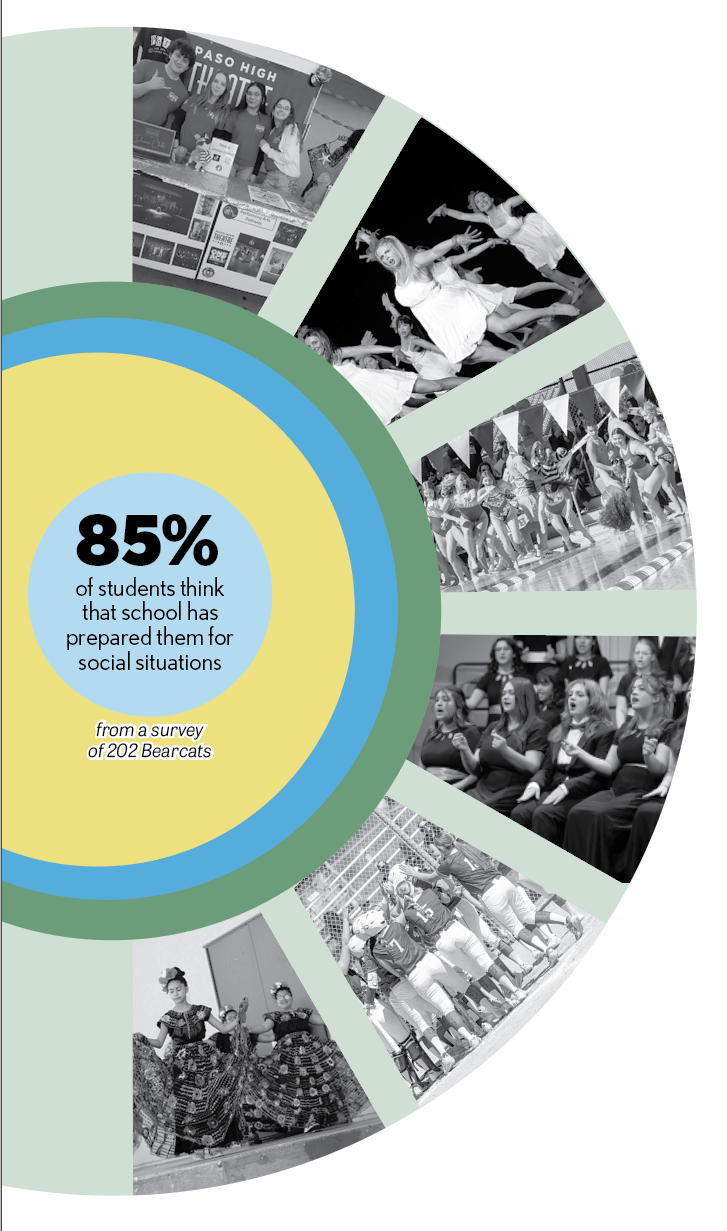
Going beyond the Paso Robles High School (PRHS) core subjects, there are many lessons that students are taught in and outside of the classroom. Subjects such as Math, Science, English, and History may not teach all the personal and social skills you would learn inside the classroom lessons.
Instead, students are taught these personal skills through the school’s environment: being in a friend group, a member in a club, or interactions during lunch and nutrition throughout the day. These environments teach students about relationships, time management, and organization without having dedicated classes focusing on these skills.
In a survey sent out on Feb. 24, 202 Bearcats said that on a scale one to five, traditional school helps them learn communication skills and teamwork skills with the average being 3.09 out of five. 50 percent of the Bearcats rated the survey a four or five with many students saying that the secret curriculum helps with communication and teamwork.
“School has helped me learn discussion skills when working with my peers. I’ve also learned how to speak in front of people from doing school presentations. Also, having so much homework, I have learned how to appropriately manage my time so that I am able to complete my homework,“ an anonymous student said.
In the classroom setting, students naturally collaborate with each other. This space fosters respect for your peers and adults in the room, helps you learn how to function around others, and students are exposed to other perspectives and ways of life.
The emphasis placed on group projects help teach students how to cooperate within a group, whether it be with people you don’t like, people you don’t want to work with, or people who you enjoy. Working within these groups prepares students to work alongside others and assists in growing relationships, as well as problem solving skills.
“In group projects, I first ask, who wants to do what? And by knowing my part, I take the weight,” junior Natalie Aguilar said. Aguilar enjoys the even distribution of work between members of group projects. “School has taught me how to interact with new people that you don’t know, that way when you go out into society, you know how to behave socially,” Aguilar said.
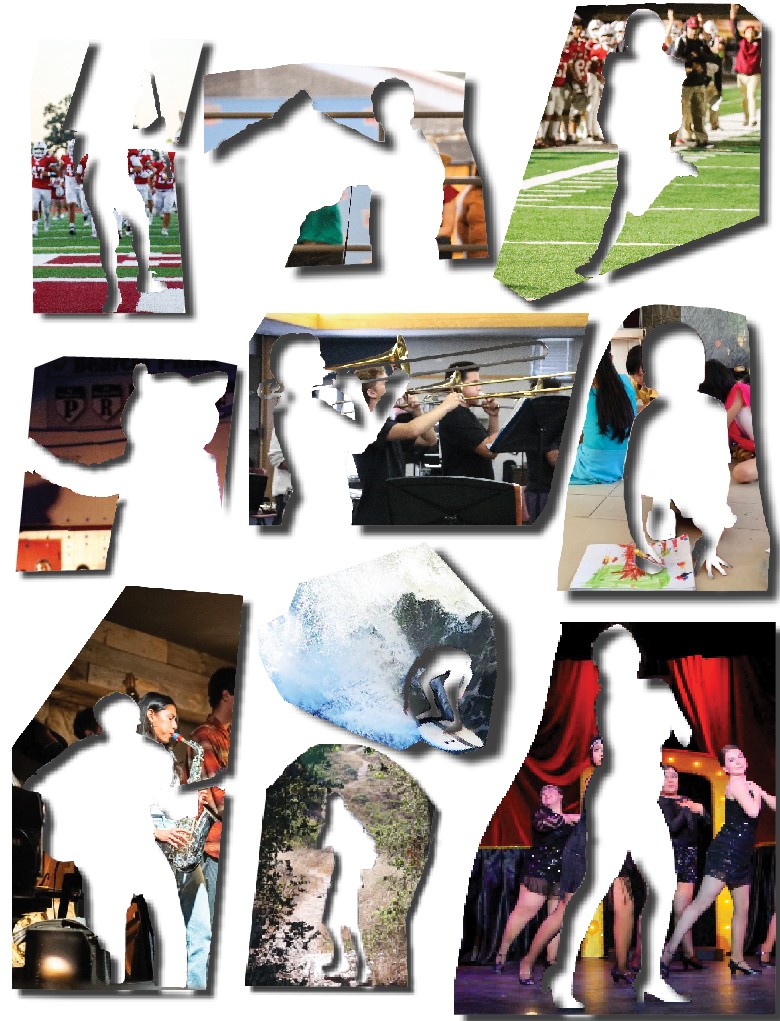
PRHS also provides a strong way for students to learn teamwork and social skills through sports. Athletes practice together and work amongst each other to succeed as a team, just as people do every day outside of school; whether that be a job, a social hangout, or other non-academic activities.
“I believe that it is important to know how to interact with people, even if you don’t have common interests, or you don’t necessarily have a super deep history with them,” senior Tremayne Clark said. Clark is the captain of the PRHS Varsity Football team. Outside of class he has learned how to work alongside his teammates and have interactions without needing to know each other on a deeper level.
PRHS doesn’t just make these experiences exclusive, they offer the same experiences for homeschooled students, as they might not know about this secret curriculum. For those who used to be in a home schooled environment, traditional schools have brought more interactions with people their age. Brothers freshman Tyler Nibecker and sophomore Clayton Nibecker were home schooled third grade to sixth grade until switching to a hybrid school before coming to PRHS for the freshman year.
Nibecker is a member of the junior varsity baseball team and is glad to have the opportunities to make new friends, whether they be in classes or on the team.
“I have made a lot more friends while at school,” T. Nibecker said.
Nibecker is also a member of the PRHS junior varsity football team and is in many honors courses.
In conclusion, the school environment teaches how group projects function, relationships, and personal organization skills. It provides places for students to grow by bonding during lunches, participating in group work, joining clubs on campus, playing sports, and meeting many other students. PRHS provides students with over 15 sports, countless clubs, and over 2,000 potential friends, yet, with all those potential and ways of learning, there are still many skills that aren’t.
These skills can be helpful in the future as you can learn how to behave in a social setting, a career, or public interaction. These skills are hard to acquire in other scenarios besides school.

Whipping up a fancy meal, mending holes in clothes, and maintaining a perfectly organized bedroom aren’t skills we’re born with—they’re necessary and learned through dedication, experience, and patience.
Home economics (home-ec) is, “a subject or class that teaches skills (such as cooking or sewing) which are useful in the home,” according to Merriam-Webstar dictionary. Most prevalent for high school females in the 1960’s, this course was meant to teach future homemakers how to support a household through topics like budgeting, cooking, sewing, and management. While it was originally segregated by gender, with women in home-e, and men in woodshop, the gender roles began to fade out around the 1970s.
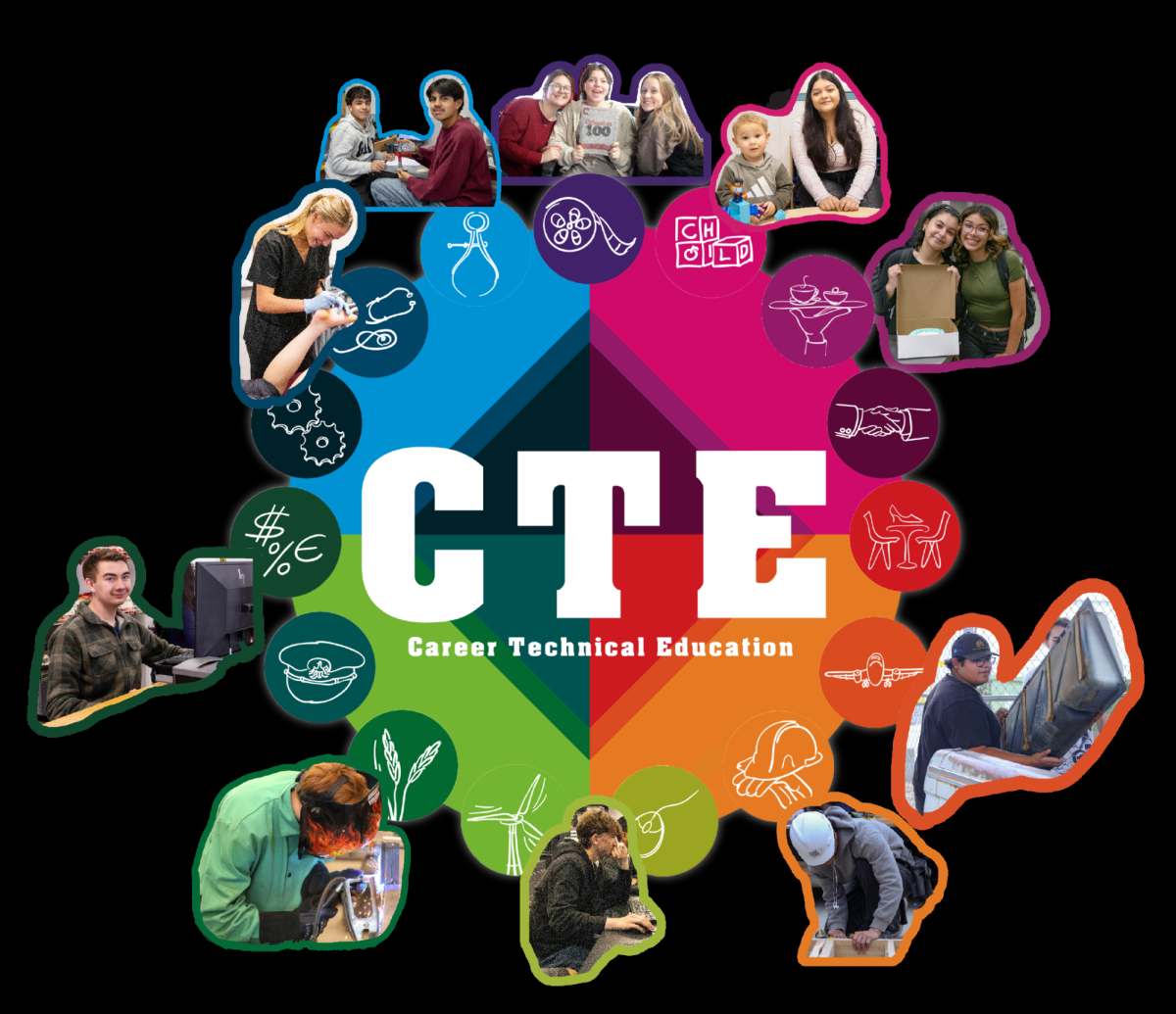
In 1994, the course pathway was relabeled as Family and Consumer Sciences (FCS), which prepared students for living in the twenty-first century and earning a living in careers (California Department of Education). At the elementary school level students begin learning about FCS topics and career options then explore specific skills in middle school. In high school, FCS ventures into nine different areas ranging from hospitality services to child education. Similar to this program, Paso Robles High School (PRHS) offers preparation for students through diverse Career Technical Education (CTE) pathways that begin freshman year.
The 10 distinct CTE pathways prepare students to work in a professional field after high school, allowing them to develop their skills over three or four years. However, these pathways are just that, a single path that specializes in preparing students for a certain career. Gone is the one-period home-economics course, where students learn various daily life skills over the span of two semesters. Instead, teenagers must learn these more basic, but equally important skills on their own, or not at all.
In a survey of 202 Bearcats sent out on Feb. 24, 88 percent of students would take a home-ec course if it was offered at PRHS. 85 percent said that they wish they were taught practical life skills in school. These life skills include cooking, cleaning, personal finance, mending, hygiene, and other abilities that are difficult to learn from a desk.
However, some Bearcats have differing opinions. Senior Karisa De la Rosa said that she would not participate in the class if it was offered because she feels that she has learned most of these skills from growing up with her family,
“I think most of the topics it would teach me I can learn from my parents, like basic cooking and nutrition.” she said.
Although De la Rosa and many other Bearcats receive learning opportunities through family, this is not realistic for over 80 percent of inhabitants across America. Americans aged 18-30 reported feeling as though they lack simple life skills, according to a 2025 poll by PapersOwl, an essay research platform.
At PRHS, a home-ec class may benefit those who have to rely on themselves for self-sustaining skills. Alumna Morgan Couture, now an AP Lang and English 2 Honors teacher at PRHS, recalls a positive and beneficial experience with a formerly offered “life skills” course.
“I really needed to rely on myself to have a lot of those independent skills at a very young age, and that class gave me the confidence to know, at the very least, I will always be able to sew and cook a meal for myself from scratch,” Couture said.
The declining popularity of these sorts of classes can be attributed to many factors like budget cuts, student disinterest, teacher shortages, and questions about relevance (NPR). At PRHS, with CTE classes reigning supreme and providing opportunities straight after graduation, a common course has little importance.
“I think schools aren’t offering home ec now because many students either aren’t that interested or prefer to learn things quickly online,” De la Rosa said, offering a student perspective.
Offering a teacher perspective, Couture disagrees with the disinterest in learning life skills.
“I think that anytime you have the opportunity as a young person to learn life skills that allow you to be more independent is an incredible thing. And so, if that’s in the form of an extracurricular that we offer on campus to students who are interested, that would be beautiful,” Couture said.
The idea of a general life skills class could be important for students who have no other resources for learning or simply do not know how to begin.
“The course could be important for students who don’t have much help at home as it teaches safe food practices and good life skills” De la Rosa said, bringing up a strong argument for the class’ reinstatement.

The hidden lessons of schools have taught us how to manage our time by throwing deadlines and assignments at us. The almighty classroom gods challenge us in group projects where we learn how to work with people we may disagree with. We adopt social skills like respect, communication and build confidence within ourselves to act ethically in society.
Look how far we’ve grown since kindergarten! These skills take us far into society and have shaped us into young adults with purpose. But with purpose comes great responsibility, which31 percent of Bearcats say school hasn’t taught them. The basic thing: how do you manage your “moolah” (according to a survey of 202 PRHS students sent on Feb. 24)
From that same survey, 65 percent of Bearcats agree that understanding personal finance is vital for success yet only 26 percent would call themselves “financially literate”.
Financial literacy, which means having the knowledge, skills, and confidence to effectively manage personal finances, is not usually taught at high schools but is vital to be able to save, budget, invest, buy a house, buy a car and pay for college. In a money system rigged against you, teaching yourself how to be financially mindful will set you up for a future of generosity and experiences beyond comparison.
AVID and economics teacher, Angela Logan, believes it is so important to be financially literate leaving high school.
“You need to be financially literate so that you can grow wealth, not go into debt, and have a nice, solid foundation for your future,” Logan said.
Through podcasts, talk shows, audio books and youtube videos I have acquired some basic knowledge of personal finance. I have become obsessed with devouring all the information possible so that I can leave high school with the most important life skill– how to manage my money.
This page outlines what I think to be the most important information for high schoolers that will help you leave high school confident in your money decisions and on track to being educated like an adult. Follow along as I walk through advice and facts about saving, budgeting, college decisions, student loans, and furthering your finance knowledge… I will give you tangible steps backed by professionals to give you the next step to being a millionaire and give you the resources to grow your financial literacy.
Note: This is what I have learned as a student and personally taught myself. This is not professional financial advice, so continue to research and seek professional support if needed.
Saving “Pay yourself first”
Saving your money is the most powerful way to build future wealth. Saving allows you to set aside money for big expenses later like for buying a car or paying for college.
“Paying yourself first” is a common strategy that means when you get paid, the first thing you do with that money is put a portion into a savings account before spending. Just saving 12 percent of your take home pay, which is basically saving what you got paid for your first hour of work, could build strong savings habits without drastically changing your lifestyle.
George Kamal, a personal finance expert and co-host of The Ramsey Show, gives an example in his book Breaking Free from Broke of a couple investing around 15 percent of their income, having the possibility to end up with $2–3 million for retirement, even though they personally contributed far less. The secret isn’t earning a huge salary—it’s consistently saving and investing over time
This 12 percent of your money could go into a retirement account, such as a 401(K) through an employer or an Individual Retirement Account (IRA). These accounts allow your money to grow through compound interest, which means you can earn interest on your original money and the interest it has already gained. For example, if you invest $1000 at 5% interest compounded annually, after one year you have $1050. In the second year, you earn 5% on $1050, not just the original $1000. Over the span of 30 years if you don’t contribute anything more to this account it will become $4,321.94. Now think if you contribute $150 a month– that’s $129,306.54… okay, now we’re talking!
It’s also important to save for other goals. Emergency funds can help cover unexpected expenses like job loss or medical bills. Not to mention saving for your dream vacations, fancy cars and exciting adventures deserves attention, too. Finish the savings conversation at crimsonnewsmagazine.org
Budgeting
Budgeting is a way to organize your wants, needs, and savings to help you mindfully spend and successfully save. Some people may use spreadsheets, notes apps, or budgeting platforms like Mint or YNAB (You Need A Budget) to see where your money goes.
“I keep everything tracked. I put down how much I make. I break down what my monthly disposable income is going to be for each thing I need to pay for,” Logan shared.
When you get paid, do something with the money intentionally! Start by paying your future self and set aside 12 percent of your pay check for savings or retirement.
After that, set aside money for specific saving goals or wants. Whether you’re saving for a car, a house downpayment, college or future dreams, consistently putting away a small amount every paycheck adds up over time.
What is left of your income goes to wants that aren’t necessary for survival: hobbies, new clothes, eating out etc.
How do I budget?
Step 1: Track how much money you receive monthly, and keep track of how much of that money you spend each month using a spreadsheet online or in the general paper pencil format. Consider these questions: How much money do you receive from a part-time job? Or what is your monthly allowance from your parents? From there, track the amount of the money you receive, and record how much of it you generally spend.
Step 2: Identify your wants and needs. Distinguish those into two categories, embodying your needs, such as school supplies, clothing, or items for extracurricular activities. Avoid buying “wants” that may be seen as something you’d buy on an impulse, such as the newest pair of designer shoes. Or instead of spending $8 at Starbucks every week, treat yourself to a drink once a month. Not only will it reduce your spending, but it can improve your health.
Step 3: Set goals. Find the objective or item you want to save up for, and arrange a length of how much time it will take you to reach that goal. Try to start small, like budgeting for new clothes and work your way up, aiming to budget for bigger things as time goes on, like saving for a new laptop.
College and student loans
The largest “purchase” looming in your future might be paying for college– and right now with the 180 percent increase of college tuition prices in the last 20 years the idea of paying for college might be overwhelming.
There is dignity in all forms for education; trade schools, community college, military programs and 4-year universities are equally great ways to get an education. No matter what you do, education often comes with a high cost. In fact, 21% of U.S. adults still have student loan debt from their education, according to the Peter G Peterson foundation.
The good news is that there are ways to reduce student debt.
Save for it: In addition to saving part of your income for retirement and other savings, put a percent away to pay for your education. Small contributions can grow over time and help you cover tuition costs, housing or books.
Fill out FAFSA and scholarships: Filling out your federal student aid information allows you to apply for scholarships and other grants. FAFSA, apply to as many scholarships as possible. $100 million goes unclaimed every year because students don’t apply for enough private, local or niche scholarships– so take advantage of this money even if it costs you a couple hours of life to write an essay.
Choose a school you can afford: Make a college decision that supports your finances, not just your dreams or reputation. Community college is a great way to start and complete general class requirements. Find a college that would help you get a degree that will support you in the long run and fits with your values.
Work while in school: Students can work on campus, tutor, grade papers for teachers, help during labs, do paid internships and more that can help cover expenses and reduce the amount you need to borrow.
To finish college debt free, Logan worked the English Department’s Writing Center on campus, was a receptionist for the Social Science and Language Arts Departments, worked as a research assistant and provided notes from her classes to the Disabled Students service.
“If you work on campus, they work around your college schedule so you don’t have to compromise education in order to get the money you need,” she said.
Reduce living costs: Continue to budget your money and be even more diligent about your spending. Spend as little as possible on “extras” like eating out or shopping especially if you are already paying for a meal plan at school. Use student discounts for memberships and spend your money on necessities.
The best way you can pay for college and leave with little debt is to maximize free money through scholarships and aid, minimize loans, and choose a school that will support your financial future.
Your donation will support the student journalists of Paso Robles High School. Your contribution will allow us to purchase equipment and cover our annual website hosting costs.