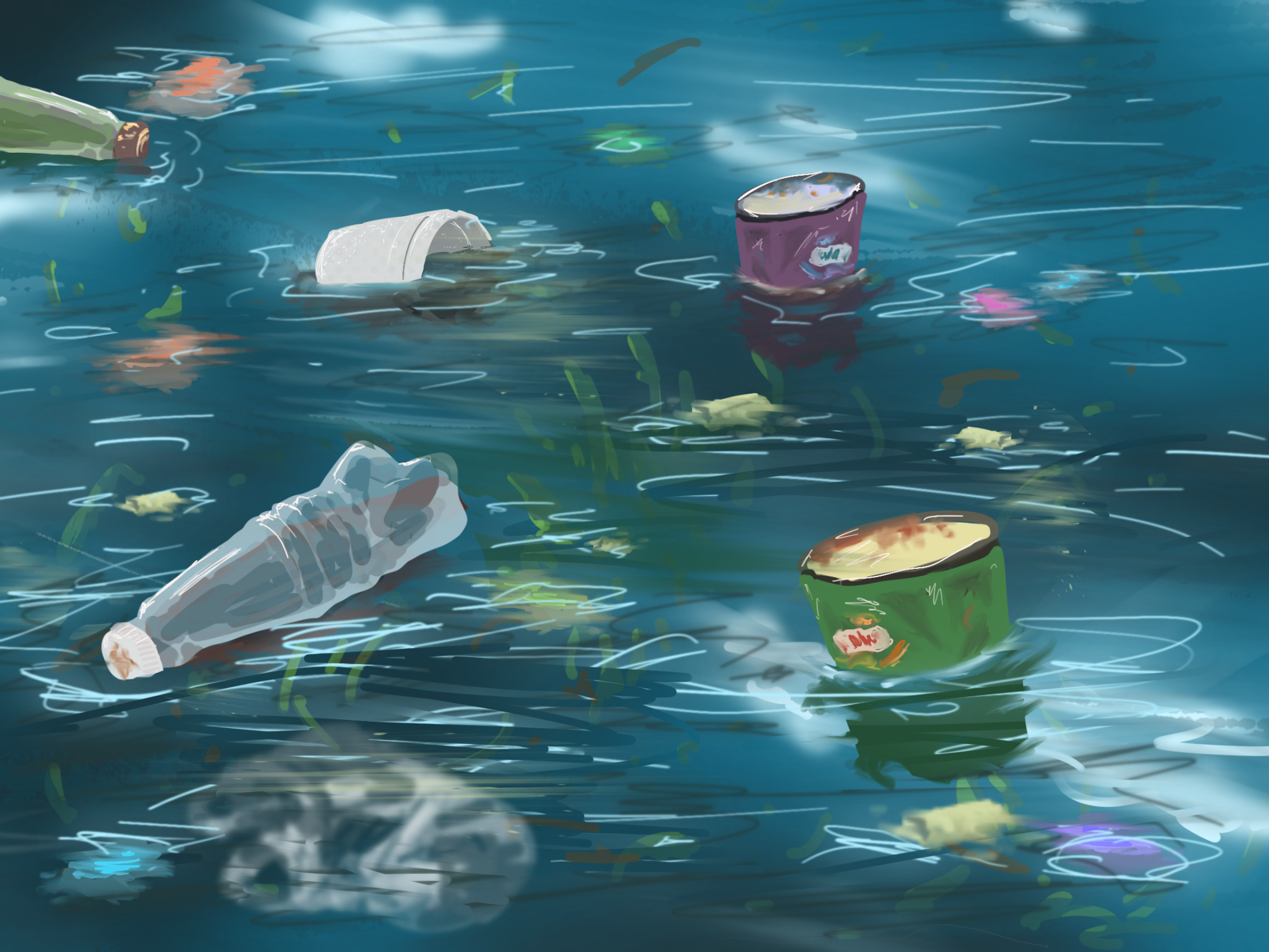
From chemical labs to deep-sea fishing, microplastics have invaded not only the environment but also human health. No matter where someone goes, microplastics continue to follow them. In fact, the human brain alone, on average, contains about six to seven grams of microplastics; that is the equivalent of one plastic spoon in our brains. With the percentage of plastic increasing by nearly 50 percent over the last eight years, the total plastic pollutants have reached nearly 200 trillion.
Microplastics are microscopic pieces of plastic that are able to fix themselves to anything they come into contact with due to their size, allowing them to travel from one area to the next. Because these pieces of plastic are microscopic, they go unseen by the human eye and without proper awareness, these plastics enter our body through inhalation, ingestion, skin absorption, and eventually are able to travel through the bloodstream they are essentially one of the only environmental and body pollution toxins that humans cannot avoid.
“We tend to ignore things that we can’t see, if we can’t see it, we act like that’s not an issue,” AP Environmental teacher Jadyn Steaffens said— while describing these plastics as being one of the most “sneaky” pollutants in our environment.
However, microplastics are not restricted by any objects or persons. A recent study conducted by Portland State University found that microplastics resided in everything ranging from the apples in our kitchen to the fish in the sea, such things that people would never view as harmful.
These pieces of microplastic have also been found to cause numerous health issues in the human body, which have been linked to colon cancer, lung cancer, reproductive health, and respiratory health. Due to the increasing amount of plastic pollution in the oceans and land, this number is only expected to grow.
As of June 26, 2025, there are roughly 170 trillion plastic particles, weighing 2.3 million metric tons that circulate the ocean’s surface waters alone. In the Pacific Ocean lies The Great Pacific Garbage Patch , which stands for GPGP, the largest collection of floating plastics in the world located between the islands of Hawaii and the coast of California. Steffens claimed that “there’s going to be huge trophic cascade problems for the ocean, just because those animals are facing issues from plastic pollution.” The University of Portland took samples from fish residing in P such as black rockfish, lingcod, Chinook salmon, Pacific herring, Pacific lamprey, and pink shrimp. Scientists found 99 percent of fish caught off the coast of Oregon contained differing levels of microplastics. Fish, along with other animals, don’t have the proper biological characteristics to digest the material of microplastics.
In January, lawmakers within Congress introduced bill H.J.Res. 76, which resulted in the weakening of the Toxic Substance Control Act, the nation’s chemical safety law. The Toxic Substance Control Act, passed in January of 2026 with the intention of maintaining the safety of civilians by keeping dangerous chemicals— similar to microplastics— out of daily items like cleaning supplies, toys, furniture, and clothing. However, due to the intervention of H.J.Res. 76, the control and containment of chemicals such as pesticides and pollutants have grown weaker. Congress is “packaging its rollbacks as victories for the MAHA movement,” stated Jonathan Kalmuss-Katz, senior attorney in Earthjustice’s Toxic Exposure & Health Program.
Despite the almost inevitable role microplastics play in the lives of people, this doesn’t imply that people can’t avoid increasing the number of microplastics in their lives. Methods of reducing microplastic consumption vary from switching from plastic water bottles to metal or glass bottles:researchers from Columbia University show that the average liter of water contains roughly 240,000 detectable plastic fragments. Refraining from reheating plastics also reduces plastic intake— reheating has been found to release excess amounts of plastics onto food and the solution would be those wraps like beeswax wrap or tin foil instead of plastic wrap. Some of these changes have already begun to affect the surroundings. States like California have already stopped offering plastic bags in order to reduce plastic pollutants