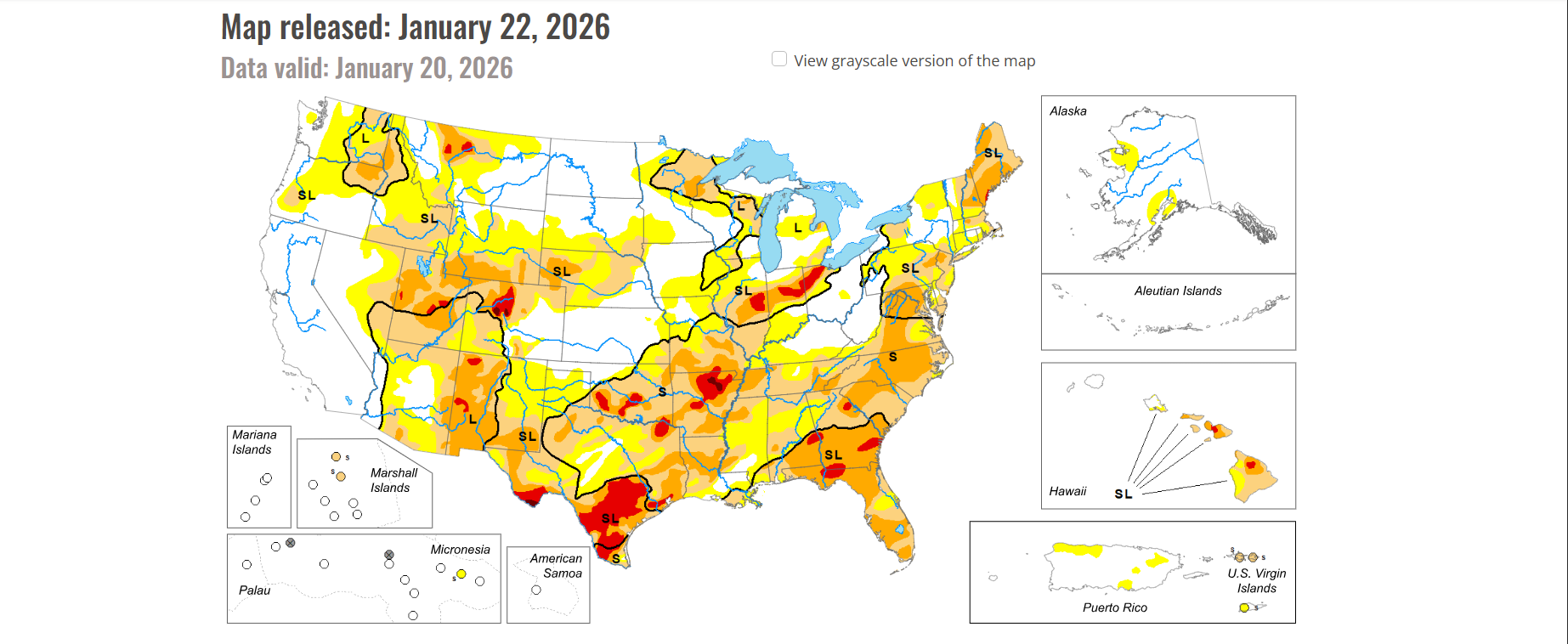

After 25 years, the state of California was announced to be drought free by the U.S. Drought Monitor on Jan 6. Since 2000, California has had periods of extreme dryness and little rainfall: wildfires occurred, water supply lowered, and ecosystems suffered due to the increasing warming temperatures and lack of precipitation.
On Feb 4, 2014, an estimated three fourths of California was in a D3 (extreme drought) or D4 (exceptional drought). D3 and D4 conditions in the four weeks prior to that report doubled from 4.13 percent to 7.37 percent. This was due to the “deteriorating conditions” of California, according to a report from the National Drought Mitigation Center.

A main contributor to the drought during those six years was the lack of precipitation, with low average precipitation levels since 2007, except for 2011. California’s winter supplies the most precipitation out of the year due the snowfall that is then stored in the Sierra Nevada snowpack. However, in 2014 due to the two degrees Fahrenheit rise in winter temperatures, the amount of snowpack decreased because as precipitation fell, it fell as rain instead of snow, according to California-Nevada Climate Applications Program.
Recently, in Southern California the region experienced their warmest and driest period in the fall and winter of 2024, which was then followed by two winters of heavy rainfall— causing an increase in plants, bushes, and other vegetation. The lack of rainfall in the Los Angeles area, combined with human factors, increased the incidence of wildfires in January of 2025.
However, in late 2025 and early 2026, the state faced a shift in levels of rainfall. This change in rainfall levels were due to El Niño and La Niña, natural climate patterns that reoccur when there is a shift in “Pacific Ocean sea surface temperatures, ocean currents, and overlying atmospheric winds,” according to the National Integrated Drought Information System.
First, La Niña, the regular pattern of oceanic cooling in the Pacific, occurred between September 2025 and January which resulted in below-average precipitation and above-average temperatures in the Southern United States; but the opposite effects in the Northern part of the U.S. The U.S. is expected to enter El Niño this summer which will lead to above-average precipitation and below-average temperatures in the Southern U.S. and converse effects in the Northern areas of the country.
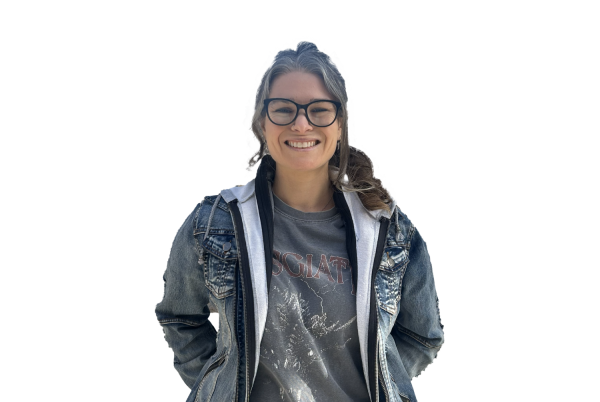
“Hearing we’re out of a drought is obviously good news but I do have a concern that people hear that and we think it’s not something we have to worry about anymore. We are still having to face climate change and things like dry soil sucking up all that water and evaporation,” science teacher Bree Johnston said.
Every month and every year experts claim it has been the “hottest period recorded,” with 2024 being recorded with said title: that year was 2.32 degrees Fahrenheit above the twentieth-century average of 57.0 degrees Fahrenheit, according to the National Oceanic and Atmospheric Administration (NOAA).
Moreover, in 2025 scientists claimed the heatwaves that occurred were 10 times more likely to happen than they were a decade ago and this was due to the anthropogenic forces that were, and continue, to contribute to world-wide climate change.
In the Pacific Northwest, drought conditions are expected to improve in the spring of this year, however California will likely not stay drought-free due to the strong effects of climate change from continuous cycles of severe, more intense droughts and severe events of rainfall thus following. This is because when the atmosphere is warmer, it pulls more moisture out of the soils and plants, which is responsible for creating droughts; and, because the atmosphere is warmer it also holds more water vapor which releases into extreme, but fewer, rainstorms.
Going forward, little things the everyday person can do to conserve California’s water is running the dishwasher only when it is full, taking five minute showers instead of 10 minutes to save approximately 10 gallons a day, turning water off when washing your hair to save up to 150 gallons a month, and etc, according to Environment America.
“I think a lot of pressure gets put on the individual person but I think it’s also important for bigger industries and companies to do their part as well and there needs to be some sort of incentive for them to do their part,” Johnston concluded.