Most students brush their teeth with non-decomposable plastic handles, but there is one who made the change to an environmentally conscious wood handle. Senior Kingston Anguiano’s lifestyle reflects living green and being environmentally conscious.
Conserving water, recycling, avoiding plastic and using natural products are some ways that people have supported the Earth.
Living an environmentally healthy lifestyle supports our health by keeping air clean, it ensures the availability of natural resources long term and for the environment, sustainable practices reduce carbon emissions and global warming,
Anguiano represents this motto through his actions of helping his family conserve water, taking the extra step to recycle and being an example for younger generations.
Anguiano is motivated to change his lifestyle because he wants to create a healthy world for the generation of people after him,
“I am a Bearkitten teacher and I have younger siblings and I want them to enjoy it the way I have and I want it to be beautiful for them” Anguiano said.
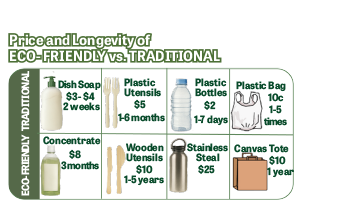
Challenges do come with living responsibly and caring for the space around you. It may not change much to walk to a recycling bin but ecofriendly alternatives may be more expensive.
“There are definitely things that cost more like we have bamboo paper towels and it does cost more than normal stuff but there are still more ways to live environmentally conscious without spending more money,” Anguiano said.
Others may switch out sponges or plastic cleaning supplies for wood scrub brushes or bars of soap, which have a higher initial cost but tend to last longer.
Buying clothing and furniture second hand is another way some have chosen to spend less for low-impact. Generation Z has led the fashion industry in second hand retail and across social media thrifting and reselling clothes has grown in popularity. 54 percent of Gen Z shoppers prefer secondhand options when available, which is significantly more than Millennials at 44 percent, according to the survey of 1,500 US adults conducted by 2025 Recommerce Report by OfferUp.
Low-impact living is vital to conserve the Earth’s natural resources and create a society for future generations that is sustainable and healthy. Government and world leaders have taken the steps to support sustainable living in their country. Countries such as Iceland, run 100% on renewable energy from high water quality whereas other countries such as Switzerland and the Netherlands have a high ranking in sustainable waste management and clean transportation that limits carbon emissions.
World leaders also signed the Paris Agreement, a legally binding, national treaty that helps countries set their own emission reduction goals. The treaty includes funding and finance to support countries in their personal goals of reducing green house gasses.
Even though world leaders can make a difference, Anguiano believes individuals can make a difference too if we are conscious of our actions.
“It literally just takes people to be conscious of what they are doing and to remind themselves to choose to recycle instead of just leaving trash, for example. If we create a culture that is just conscious of the environment we can make a change,” Anguiano said.
Try visiting a local thrift store, picking the reusable water bottle in the morning or reminding your younger sister to turn off the sink. There are numerous low cost ways to make a difference and preserve the habitats and health of humanity.
And as Kermit the Frog said “It isn’t easy being green,” but it sure is worth it