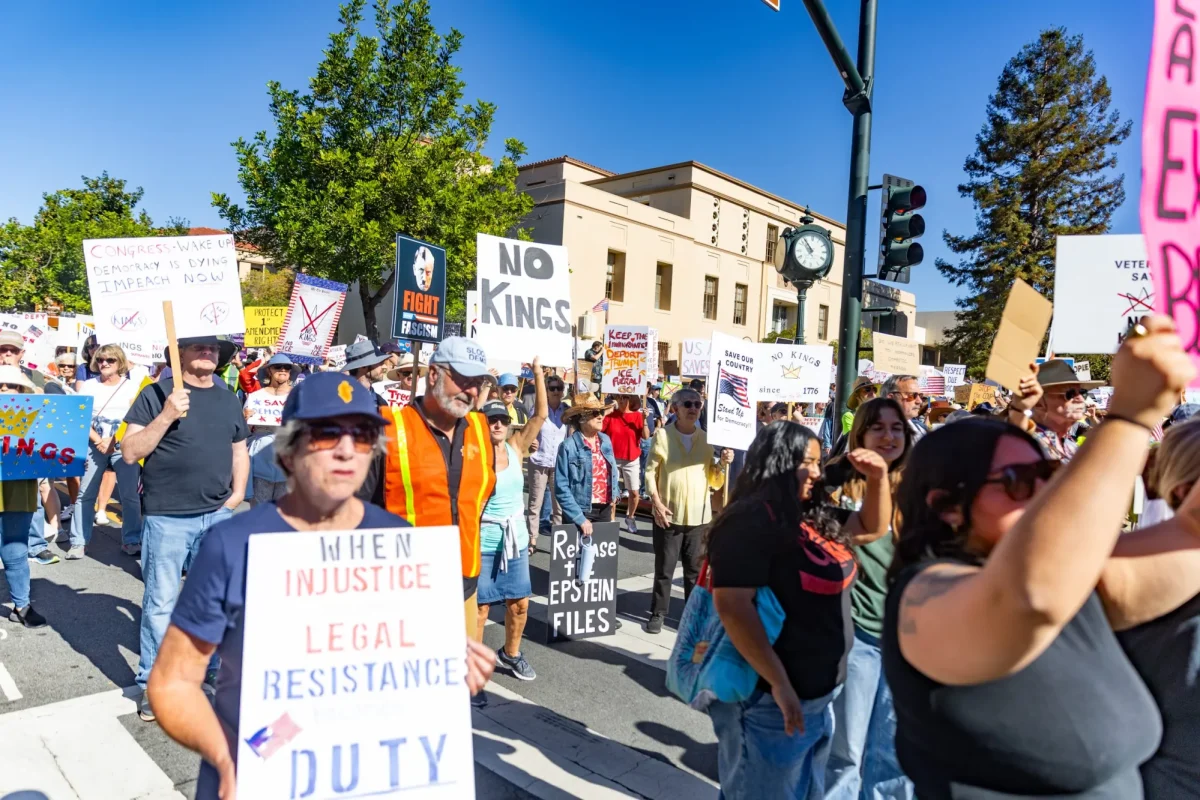
Image from the “No Kings” protest in San Luis Obispo from Mustang News, the news outlet for Cal Poly University, San Luis Obispo. Check out this story on local SLO protest!
Since time immortal, protests have been used to confront antagonism— to one’s ideals, home, or wellbeing. Protests for ancient humans primarily manifested in the form of warfare, and a similar train of thought held fast well into the 19th century AD. At the dawn of the 20th century, specifically after the Second World War, new ideas of what protesting could mean emerged. In a new age, less violence was perhaps possible. This idea of peaceful protests spread with Martin Luther King Jr’s civil marches, and the Montgomery Bus protests inspired by Rosa Parks and have continued into the 21st century.
Leading into the 2020s, dozens of protests have emerged, whether it be against racism, government policies, or civil rights. Peaceful, violent, global, or local, each participant is advocating for something that matters to them; that is what makes protests so powerful.
“The cool thing about protests is that it can be different, depending on what the situation requires. ” Seth Draine, Government and AP US History teacher said.
The “Portland Frogs” movement spawned after President Donald Trump sent over 200 Oregon National Guard troops to the city of Portland, Oregon on Sept. 28, 2025, with the goal of defending the U.S soil. Each state has its own National Guard, and both the state and federal government are able to deploy them under certain circumstances.
Trump’s rationale for deploying troops in Portland was, “You look at Portland and you see fires all over the place. You see fights, and I mean just violence. . . And then you talk to the governor and she acts like everything is totally normal.” However, many Portlanders claimed that the deployment was unlawful, and that the claims of violence were exaggerated. To combat this, the legions of Portland deployed their own guard: inflatable costumes.
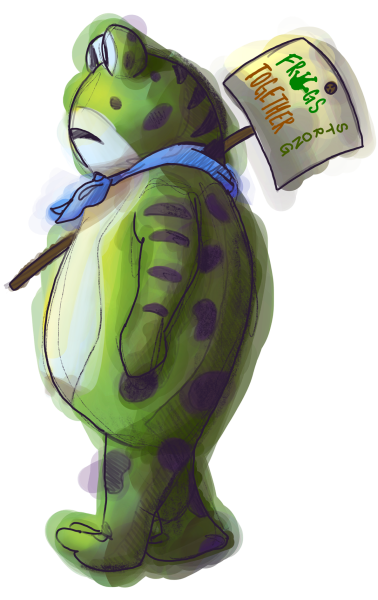
After a couple days of troops being stationed outside of a local ICE facility, as per the orders of the Trump administration, a singular, inflatable frog costume appeared. Slowly, more and more inflatable costumes appeared, until there were over 70 standing outside of the ICE building— including more frogs, but expanding to unicorns or other animals. As one frog commented, “It is a strategy to cut the narratives of the Trump administration, which says we are extremely violent. No, we are protesting, but with humor.”
Draine also commented on the Portland frog movement, “[Protests] show how ridiculous certain arguments are. The same is true of Portland, and least that’s their intent to counter the claim that Portland is a war zone. . .They’re going to do exactly what they think is the exact opposite of a war zone and dress in mascots. I’m not saying they’re correct or incorrect, but that’s the goal.”
The humorous protesting of the Portland frogs goes hand-in-hand with humorous signs made during the No Kings protest. With deep motivation behind their words, millions of Americans created both funny and meaningful signs to protest President Trump’s candidacy recently.
On Oct. 18th, 2025, more than seven million people world-wide rose up to protest the same idea: America has no kings. In all 50 states (and allied countries/territories, such as Puerto Rico, Mexico, Canada, and Europe) the American people organized a protest against President Trump and those in government that stand with him. More than 200 organizations such as the Third Act Movement, American Civil Liberties Union, and Public Citizen gave voice to the protests. The strongest voices of these protests, though, belong to those who are marching in the streets holding up signs that say “No kings since 1776.” “We’re not here because there’s hope, there’s hope because we’re here.” and “The Constitution is not optional.” Signs similar to those decorated the streets during the protests, with the largest protests being in Los Angeles, Philadelphia, and New York, according to ACLED data. Although 99% of protests demonstrated were peaceful, some protesters faced a not-so-peaceful response. In Los Angeles, tear gas and rubber bullets were used on protesters by police after their approved time to rally had expired. Similar methods of crowd control were used in Portland, Oregon. Although they faced some violent response, the protesters did not back down.
 Local streets like Spring and 12th were filled in Paso Robles, with a small “No Kings“ protest happening, and a much larger one occurring in San Luis Obispo. Trump supporters responded to the protests by calling it the “Hate America” rally. Vermont Senator Bernie Sanders replied, “We’re not here because we hate America, we’re here because we love America.” Demonstrators are hoping for another protest in which they can create meaningful signs, and produce music with their voices.
While some forms of protests lead into movements, not all “protests” result in a movement. Although protests are short-term, and focus on a specific person or event, movements are long-term focus on a broad topic. Sometimes, when the word “protest” is said, people imagine violence for short-term problems. Movements, however, are typically non-violent and are a cry for emotion, similar to the previously mentioned Martin Luther King Jr. marches.
The Black Lives Matter movement (BLM) started in 2014 when Mike Brown was killed by Ferguson police. Later in the year, Darnell Moore and Patrisse Cullors organized a BLM caravan . Within 15 days, 600 people helped call attention to the movement and support Mike Brown in St. Louis. Putting their life on the line, organizers and participants committed to spreading the idea that Mike Brown represented what happens to Black communities all over the world. As a result, the BLM movement assisted in preventing undeserved violence towards the Black community. The official BLM organization focuses on redirecting attention to the lives and success that comes from their communities.
“We do things to make black students feel more welcomed, more heard, and that black people are allowed to be the person they are without feeling discriminated” Mekdes Siegrest
“We affirm our humanity, our contributions to society, and our resilience in the face of deadly oppression,” the organization said.
They heal the past and give hope to the present and future through their arts and culture. This art and culture is in the process of being appreciated all over, and has even reached PRHS students who may appreciate it. At PRHS, Black Student Union (BSU) shares the goal of celebrating black success and making black students feel welcome. For BSU President, Mekdes Siegrest, the BSU club gives her the opportunity to bond with fellow board members and create a positive environment.
“It makes students feel like they have a place to go to make others aware of black students, as well as letting people know there’s a support system for everyone,” Siegrist said.
Siegrest shared that she has always admired the fact that the BLM events are peaceful and that participants are capable of coming together and discussing issues without making new ones. She carries this admiration into BSU, by teaching members to have a peaceful mindset and to refrain from escalating situations.
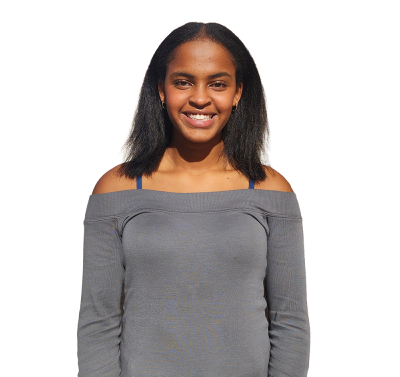
“I’ve always wanted people to know that whenever we have protests, we want people to think of us in a positive way, and not that there is going to be a bad outcome,” Siegrest said.
Both BLM and BSU share the desire to educate people and draw attention to black communities, whether it’s all over the world, or in one school.
In school, you can stand up for what you believe in unique ways. Protests and movements bring change for what people believe in.