Moshing Against The Mainstream


Rooted in political defiance and underground music, the alternative scene has undergone a noticeable transformation.
The term “alternative” originally described people, music, and fashion existing outside mainstream culture. Its roots trace back to the punk and goth movements of the 1970s and 1980s, which emphasized activism, DIY artistry, and anti-establishmentJU values, according to a study by Dawson Barrett in the American Studies Journal.
In recent decades, the movement expanded to include emo, grunge, and indie subcultures, all tied together by an ethos of individuality and creative freedom.
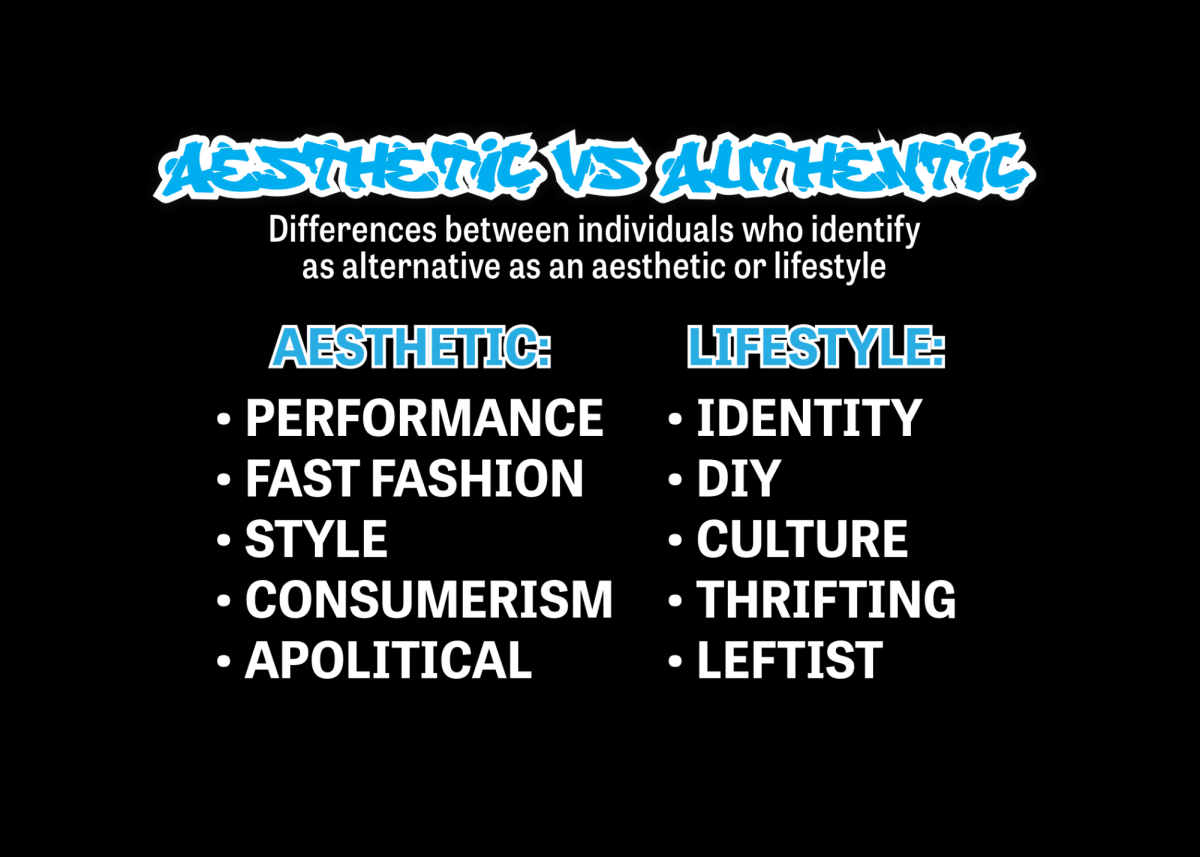
But as the term, alternative, spreads across social media, its meaning has shifted. What began as an identity rejecting mainstream ideals has evolved into a widely recognizable aesthetic- one that’s as likely to appear on TikTok feeds as dark outfits, makeup with thick eyeliner harsh nose contour, or piercings– symbols that once carried social and political weight.
For junior Lyric Johnson, the shift to digital platforms has changed what it means to be alternative.
Johnson grew up surrounded by music and underground culture, getting her start in the Bakersfield scene at a local venue called Jerry’s Pizza, where her mother once worked.
To Johnson, the sense of belonging that live shows create can’t be replicated online,
“At a show, you feel the adrenaline and energy of everyone around you. Through social media, people just see [moshing] as swinging around– they don’t really feel it,” Johnson said
Still, Johnson has noticed that the community’s values have shifted. She explained that many people now treat being alternative as a trend rather than a belief system rooted in individuality and activism. To her, the culture has become diluted as outsiders adopt the look without understanding the meaning behind it,
“Now, it’s kind of a joke- people say it’s not about politics, it’s about the way you dress. But that’s not true. Being alt is literally about human rights,” Johnson said.

While being alternative has become more prominent on social media, this newfound popularity has also helped bring new perspectives and people to the community. Growing up in a conservative environment, freshman Sarina Lazarre, explained that one reason she became alternative is for its style and defiance of social norms. Initially Lazarre thought it was just a style until the 2024 presidential election, where she witnessed various alternative people post their opinions.
As the alternative scene continues to evolve, its meaning remains fluid–shaped by both tradition and technology. For many, like Johnson and Lazarre, being alternative still carries the spirit of rebellion and individuality that defined its origins, even as it expands beyond underground venues into the digital world.
While social media has blurred the boundaries between genuine expression and aesthetic trend, it has also opened doors for a new generation to rediscover the movement’s roots in activism and authenticity. In the end, being alternative may no longer be about rejecting the mainstream entirely, but about redefining it– one post, one outfit, and one voice at a time.
Various TikTok posts regarding alternative culture fall under the following hashtags: #alt #poser #goth #alttok. They vary from promoting alternative’s beliefs to some disagreeing with them. Often those who disagree are called “posers.”
On social media, the alternative community has divided between being strictly alternative and treating the term as a spectrum.
Your donation will support the student journalists of Paso Robles High School. Your contribution will allow us to purchase equipment and cover our annual website hosting costs.


