Life Lessons to Laughter

Growing up for many Latino Bearcats looked like sitting on the couch beside their parents as La Rosa De Guadalupe played in the background. Since its premier in 2008, the soap opera has become a staple of Latin American television, ranked as the most in-demand Latin American export series worldwide (globaldemandawards.com). Viewers follow a new cast every episode who experience mature world issues or mediocre dilemmas, the ending of each 40 minute episode would conclude with the protagonists learning a lesson.
The drama has long been used by parents to entertain and educate their children about social standards.
Senior Ruth Fuentes recalls watching La Rosa De Guadalupe with her mother, particularly the episode “Hermoso Bebe”. This episode aired on July 27, 2011, and followed a pre-teen, Clara, who fell victim to a group of child traffickers disguised as a casting call for talented teens.
“I remember watching a lot of different situations, and lots of issues that happen around the world, and I think they just taught me to be more aware of my surroundings,” Fuentes said.
Fuentes described the episode as very scary and serious leading to a lecture from her mother about online safety. She now carries this memory with her and knows how to safely scavenge the internet.
While La Rosa De Guadalupe raises awareness about social issues, particularly gender stereotypes and violence, the current generation of Latinos has grown up viewing this show more for amusement and less as a moral guide.
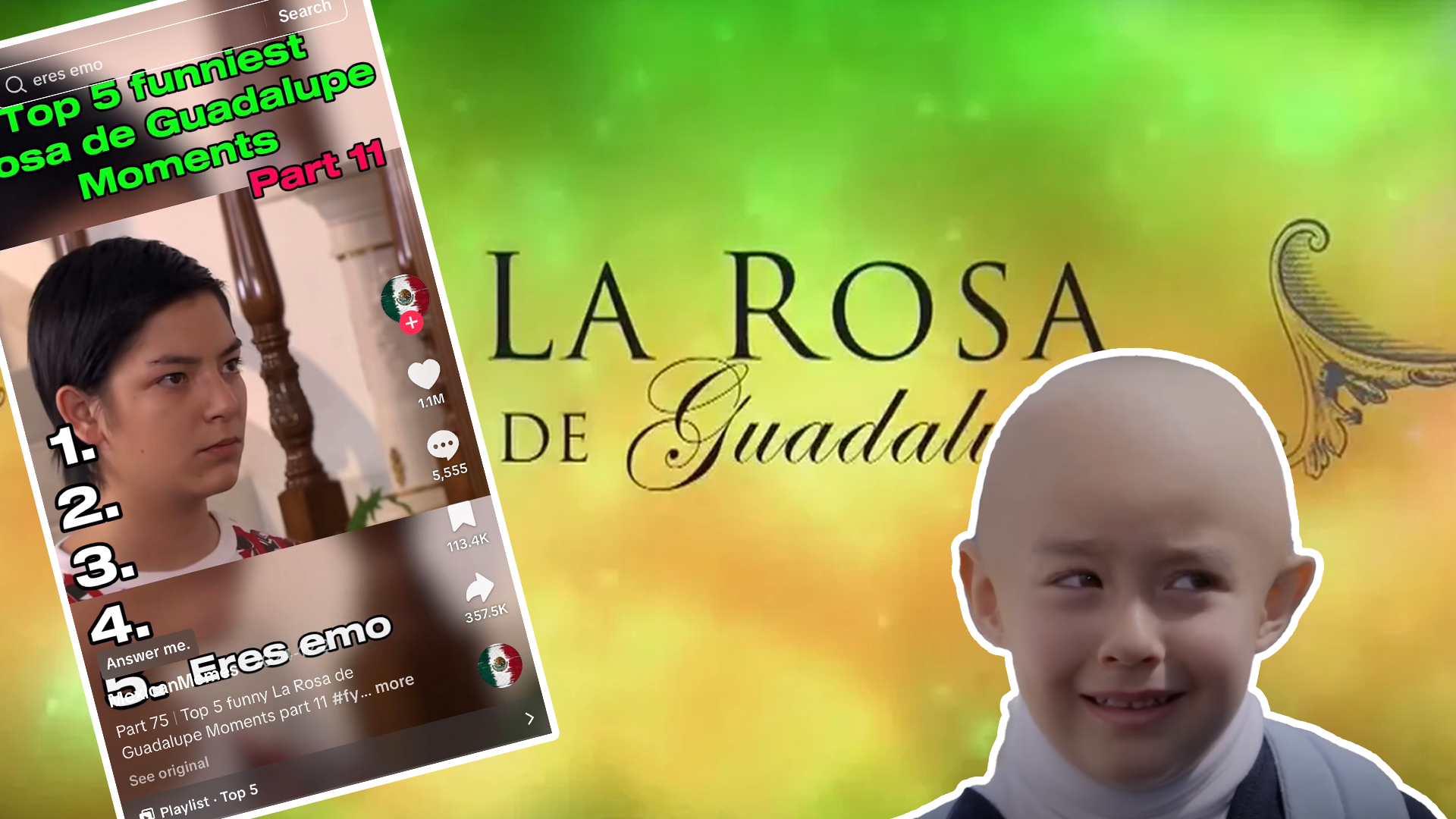
 On social media, the soap opera has transformed into an unexpected meme factory, with viewers mocking its improbable plots involving phone addictions, cheating scandals, and much more. One episode that became a meme, was “Xochitl y Armando”, aired on Jan. 1st, 2019. The episode follows a little girl, Xochitl, who is gifted a lice-infested stuffed bunny by her school bully. After days of sleeping with the stuffed animal, Xochitl’s hair is infested with lice. Treatment after treatment, the lice was uncontrollable, ultimately leading to her head being shaven. Entering the playground with a new look, numerous classmates point out that she’s bald- they all chant around her, “she’s bald, she’s bald!”.
“When I first saw it, I thought that was mean because it wasn’t her fault that she had lice. Then, after it went viral, it became funny because they were just little kids just going in circles around the girl for being pelona,” Fuentes said.
As more clips from the show are taken out of context, young latinos have begun to make references. Both Fuentes and Gutierrez associate the term pelona to this clip along with other phrases associated with other clips. Furthermore, La Rosa De Guadalupe has recognized itself as a meme. Throughout 2022, the trend “Real Life vs. La Rosa De Guadalupe” became a viral meme, which would take someone stubbing their toe, to an extreme of them falling down a flight of stairs. This led to the episode, “Click Clock en Peligro”, featuring a mom recreating said meme.
“Overall the show was already popular and I feel like a lot of people got to know the show [through social media] that didn’t really know this show, through the meme” Gutierrez said.
Whether it’s moms using the show to lecture their kids, or teens laughing at pelona chants online, La Rosa de Guadalupe has secured its place in Latino households. What started as a series teaching moral lessons has now become an inside joke for a new generation.
Your donation will support the student journalists of Paso Robles High School. Your contribution will allow us to purchase equipment and cover our annual website hosting costs.