Scroll, Believe, Repeat



SOCIAL MEDIA’S INFLUENCE ON POLITICS
A wave of outrage has stormed apps like Tiktok and Instagram on controversial political posts, with individuals labeling one another as the ‘woke left,’ or the ‘uneducated right.’ Heated debates have emerged online, often boosting political misinformation rather than productive discussions.
Going into 2026 with the Trump administration, tensions continue to remain high on both sides of the political spectrum, leaving the nation ununified with a new generation on the rise; social media allows the youth to be politically informed, speak up to voice their concerns, and question the state of the country. Aside from being present in the public eye, teens witness political conflict with Congress, new laws, violence, injustices, and protests from exposure to apps like Tiktok, Instagram, or Facebook. The fight goes beyond the screen, as youth grapple to distinguish what is the truth and what is deemed as political misinformation.
Political misinformation is the false or inaccurate spread of information or rumors about political figures, elections, policies, etc. The spread of misinformation reigned for centuries, and can especially be noted in the 19th Century’s, “yellow journalism,” used to make profit off of newspapers by spreading rumors or exaggeration, and gossip, erupting mass conflict with newspapers, and influencing the public opinions. Today, a significant portion of misinformation has been noted to spread from social media, with over 50 percent of Americans trusting social media platforms.

“The concern with it is this shift to sound bite or sound clip media where individuals are getting short, heavily edited versions of accounts and not necessarily getting the full context of events. As a result, we’re starting to see the public becoming highly reactionary to these clips designed to gain attention versus necessarily inform the people,” government teacher Ryan Askew said.
Reactions from the public to clips have spewed upset and aversion between the two Conservative and Liberal parties. The parties have turned to Instagram and Tiktok, with Conservative members labeling Liberals as, the ‘woke left:’ woke defined as having focus and awareness concerning racial injustice and social inequality. Liberals struck back, labelling Conservatives as the ‘uneducated right’ stereotyped as ‘ignorant’ prioritizing traditional and social issues.
Youth often rely on social media to relay their sources of political intake. In the 2024 electoral race, the youth who engaged in voting reportedly obtained their political information from news websites, whereas individuals who did not vote obtained their information from, “ X/Twitter (18 percent vs 11 percent), podcasts (13 percent vs 6 percent), and Facebook (33 percent vs 21 percent),” (Tufts).

Senior Reangelle Rosas believes that social media has had a more positive impact on politics rather than a negative one. Rosas explains that she mostly gets her information from Tik Tok and Instagram
“I definitely think that social media has opened more doors for people who weren’t aware of situations that were going on in current times, but double-checking and researching it is important too since it’s social media,” Rosas said.
Rosas steers away from political podcasters or influencers on social media because she believes most of them don’t provide the genuine facts.
“I don’t believe everything that’s posted on social media, so I just double check, but mostly on political movement accounts since the majority have receipts to back it up,” she said.
How can the youth navigate social media when politics is involved?
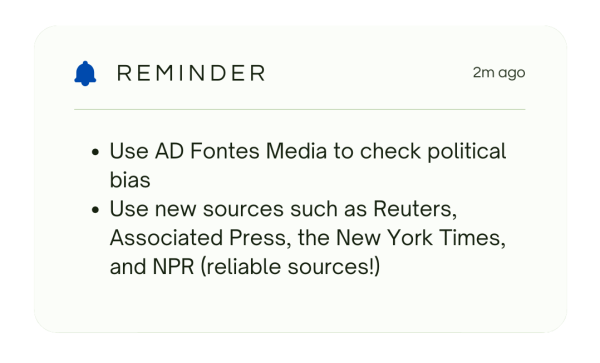
A common and well known reminder may be checking your sources from where you receive news from, to determine whether they’re reliable or not. Teachers educate and provide students with websites to check political bias like Ad Fontes Media, reliable for checking biased media sources, using news sources like Reuters, Associated Press, the New York Times, NPR, and navigating green flag, gray flag and red flag sites.
Your donation will support the student journalists of Paso Robles High School. Your contribution will allow us to purchase equipment and cover our annual website hosting costs.


